

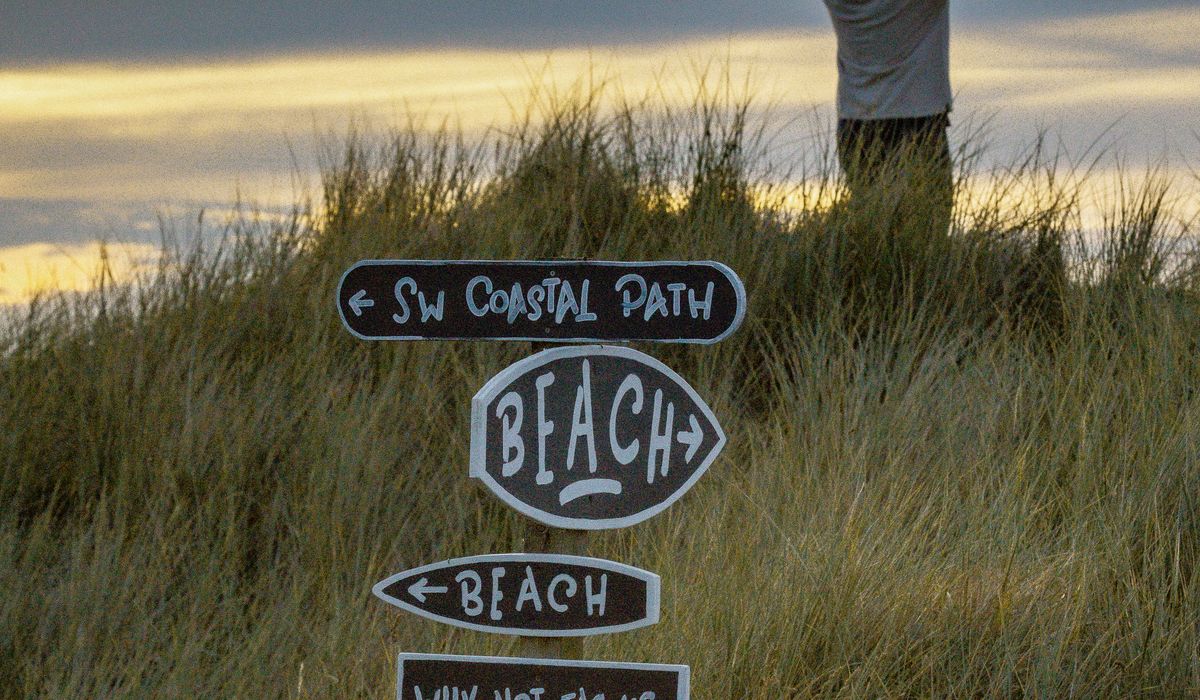
The single most effective trick for finding an empty beach in Britain is embarrassingly simple: get there before everyone else. On a warm Saturday in August, most car parks near popular beaches fill by half past nine and are turning people away by eleven. Arrive at seven, and you will often have a whole bay to yourself for two or three hours, with the light still low and the sand unmarked.
This matters more than which beach you choose. A famous cove at 7am is quieter than an obscure one at 2pm. Set your alarm, take a flask, and eat breakfast on the sand. You will also dodge the worst of the traffic on the approach roads, which in places like north Cornwall or the Pembrokeshire coast can add an hour to a journey on a sunny Sunday.
Early arrival has a second benefit: parking. Many coastal car parks are small, charge by the day, and have no overflow. Being first in means no circling, no reversing down narrow lanes, and no argument with a drystone wall.
British beach crowds follow a predictable rhythm, and once you know it you can plan around it.
Shoulder seasons are the quiet secret. Late April, May, June and September offer decent weather, open cafés, and beaches you can walk across without stepping over towels.
Here is the rule that changes everything: the crowd stops roughly where the tarmac does. Almost everyone settles within a few hundred metres of the nearest car park, beach hut row or promenade. Walk for fifteen to twenty minutes along the coast path, and the density of people drops dramatically.
Look for the following on a map before you go:
Northumberland, the Yorkshire coast, Anglesey, the Llŷn Peninsula, the Scottish islands and the quieter stretches of Norfolk and Suffolk all reward a bit of walking. So do the lesser-known bays of Devon and Cornwall, provided you are prepared for steep steps.
Wind direction decides which beaches are pleasant and which are empty for a reason. On a breezy day, look for a bay sheltered by high cliffs or a headland on the windward side. A beach facing east can be calm and warm when a south-westerly is blowing, while west-facing favourites are being sandblasted.
Tides matter just as much. On many British beaches, the usable sand at high water shrinks to almost nothing, which pushes everyone into a narrow strip and makes a place feel crowded even when it is not. Arrive as the tide falls, and the beach expands in front of you.
Safety points worth repeating:
Effort is a filter. Beaches reached by a long staircase, a steep field path, a scramble over rocks, or a walk of more than a mile tend to be far quieter than those with a slipway and a kiosk. If you are reasonably fit and carrying light, this is your greatest advantage.
Small islands offer the same effect. A short ferry crossing puts a stretch of water between you and the day-trippers, and islands such as those off the Scottish west coast, the Inner Hebrides, or the smaller Anglesey and Cornish outposts often have beaches of real quality with only a handful of people on them.
Also consider shingle and pebble beaches. They are less comfortable for sunbathing, so families with buckets and spades head elsewhere — but they are wonderful for swimming, rock-pooling and watching the water.
Quiet beaches rarely have facilities. Take water, food, a windbreak, sun cream, a warm layer and something waterproof, because British coastal weather turns quickly. Wear shoes with grip for cliff paths, and tell someone where you are going if you are walking a remote stretch alone. Mobile signal is patchy in many coves.
Finally, treat these places gently. Take everything home with you, keep dogs under control where there is wildlife, and stay off fragile dunes and nesting areas. The empty coves are empty precisely because they have been left alone — and the best way to keep finding them is to leave no trace that you were ever there.

Coastalisle Real stories, useful guides and the occasional recommendation, all in one calm corner of the web.

Coastalisle Real stories, useful guides and the occasional recommendation, all in one calm corner of the web.

Several operators connect mainland ports with island communities, so book vehicle spaces early and always check weather updates before setting off.

Comments
ALina Kelian
19th May 2018 ReplyCoastalisle An honest, everyday look at the things that make life a little better — with advice you can actually use. ullamco laboris nisi ut aliquip ex ea commodo consequat.
Rlex Kelian
19th May 2018 ReplyCoastalisle No rushing, no fuss — just thoughtful notes and practical help, written by people who care. ullamco laboris nisi ut aliquip commodo.
Roboto Alex
21th May 2018 ReplyCoastalisle We spend our time finding what works so you don't have to, and sharing exactly what made the difference. ullamco laboris nisi ut aliquip ex ea commodo consequat.