

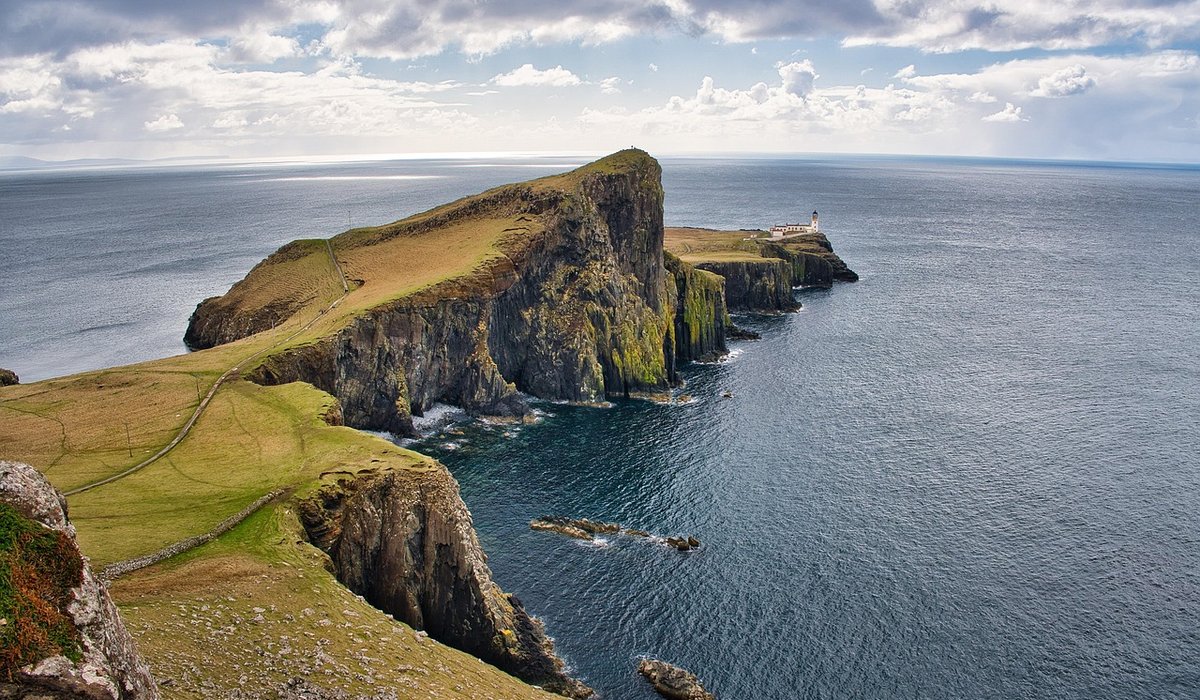
Winter strips the British coast back to something rawer and, frankly, more interesting. The car parks empty, the beach cafés put up their shutters, and the light turns a hard silver that photographers spend all year chasing. Prices drop accordingly — a seafront cottage that costs £200 a night in August can be half that in January, and many places throw in a log burner and a welcome bottle of something local.
The trade-off is that you need to plan a little more carefully. Britain's coastal economy runs on summer, and plenty of businesses close from November to March. A bit of homework turns a potentially frustrating trip into a superb one.
Empty beaches are the obvious prize. On a bright, cold morning in February you can walk a mile of sand in Northumberland or Pembrokeshire and see nobody but a dog walker and a flock of oystercatchers. Wildlife watching improves too: seals pup in autumn and linger into winter, wading birds mass on estuaries, and short winter days concentrate the light into long, glowing afternoons.
Storm watching has become a genuine pastime. There is nothing quite like sitting behind a pub window with a pint while the Atlantic throws itself at the harbour wall. Do it from safety, though — never from a pier or a sea wall in a big swell, and keep well back from wave-swept promenades. The coastguard's advice is blunt and worth heeding: waves can and do sweep people off coastal paths every winter.
Not every stretch of coastline works equally well in winter, and matching your destination to the weather you can tolerate makes all the difference.
The south-west — Cornwall, Devon, Dorset — is the mildest option. Frost is rare on the far west coast, and towns such as Penzance, Falmouth and St Ives keep a decent number of places open year-round because they have resident populations rather than purely holiday ones. The South West Coast Path is walkable in almost any month, though sections get seriously muddy.
The east coast is colder and windier but offers huge skies and some of the best birdwatching in Britain. Norfolk's marshes and the Suffolk coast around Aldeburgh and Southwold are wonderfully atmospheric in a hard frost, and the towns have proper year-round pubs and fishmongers.
The north — Yorkshire, Northumberland, County Durham — is for people who like their coast bracing. Whitby in winter, with abbey ruins black against a grey sky and a kipper smokehouse still working, is hard to beat. Northumberland's beaches at Embleton, Bamburgh and Druridge Bay are vast and almost always deserted.
The islands are the real adventure. The Isle of Wight stays remarkably accessible, with ferries running all year. Further afield — Anglesey, the Isle of Man, the Hebrides, Orkney, Shetland — you are at the mercy of the weather, and winter sailings are frequently cancelled or rerouted. Allow a spare day on either side of your crossing and you will be far less stressed.
This is the single most important piece of winter planning. Assume nothing.
Book self-catering rather than relying on hotel dining, and plan to cook in a couple of nights. Take a torch, cash for the odd honesty box, and don't count on mobile signal in remote coves.
Sunset in December can arrive before 4pm in the far north, so structure your days around daylight. Walk in the morning, eat a late lunch, and save the afternoon for a museum, a castle, a bookshop or a very long pub lunch.
Tides matter more in winter, because daylight gives you less margin for error. Check a tide table before any beach walk, and remember that coastal paths erode — stick to marked routes and take a paper map, since phone batteries die fast in the cold.
Assume rain, wind and cold, then be pleasantly surprised. Waterproof jacket and trousers, warm layers, sturdy boots with grip, hat and gloves, and a dry bag for electronics. Spare shoes for the car. A thermos is a genuine game-changer on a clifftop bench.
Winter on the British coast is not a compromise on summer — it is a different holiday altogether. Bring the right kit, ring ahead, watch the tides, and you will find the season's emptiness is exactly the point.

Coastalisle Real stories, useful guides and the occasional recommendation, all in one calm corner of the web.

Coastalisle Real stories, useful guides and the occasional recommendation, all in one calm corner of the web.

Start by checking ferry timetables and seasonal accommodation, then build an itinerary that leaves room for weather delays and spontaneous coastal discoveries.

Comments
ALina Kelian
19th May 2018 ReplyCoastalisle An honest, everyday look at the things that make life a little better — with advice you can actually use. ullamco laboris nisi ut aliquip ex ea commodo consequat.
Rlex Kelian
19th May 2018 ReplyCoastalisle No rushing, no fuss — just thoughtful notes and practical help, written by people who care. ullamco laboris nisi ut aliquip commodo.
Roboto Alex
21th May 2018 ReplyCoastalisle We spend our time finding what works so you don't have to, and sharing exactly what made the difference. ullamco laboris nisi ut aliquip ex ea commodo consequat.